
Many Missouri homes suffer from basement water, and at Firm Foundation Repair, we want to help you decide between interior and exterior waterproofing. We know how stressful it feels when water shows up in the basement, and we aim to make the choices clearer for you.
Water in basements can cause structural damage, mold growth, and poor indoor air quality. We will compare foundation waterproofing methods and explain how French drains, sump pump systems, excavation, vapor barriers, drain tile, and hydrostatic pressure affect your home.
Interior waterproofing keeps water from reaching your basement using drainage systems and sump pumps inside the home. Exterior waterproofing stops moisture at its source by sealing the foundation walls outside, giving extra protection against Missouri’s clay soil and heavy rainfall.
We inspect your foundation before we plan any waterproofing, ensuring we apply the right solution for your property.
To start the interior waterproofing process, we cut a trench along the basement floor perimeter to fit drainage tiles that collect water and channel it to a pump system. We then install a pump system, usually a sump pump, to remove the collected water and connect it to an exterior discharge or sanitary line as local code allows. Next, we apply foundation sealants and vapor barriers to the inside walls to stop moisture migration and slow water infiltration at cold joint areas. Finally, we tie the interior perimeter drains into an interior French drain that leads to the sump, and we test the flow to confirm proper operation.
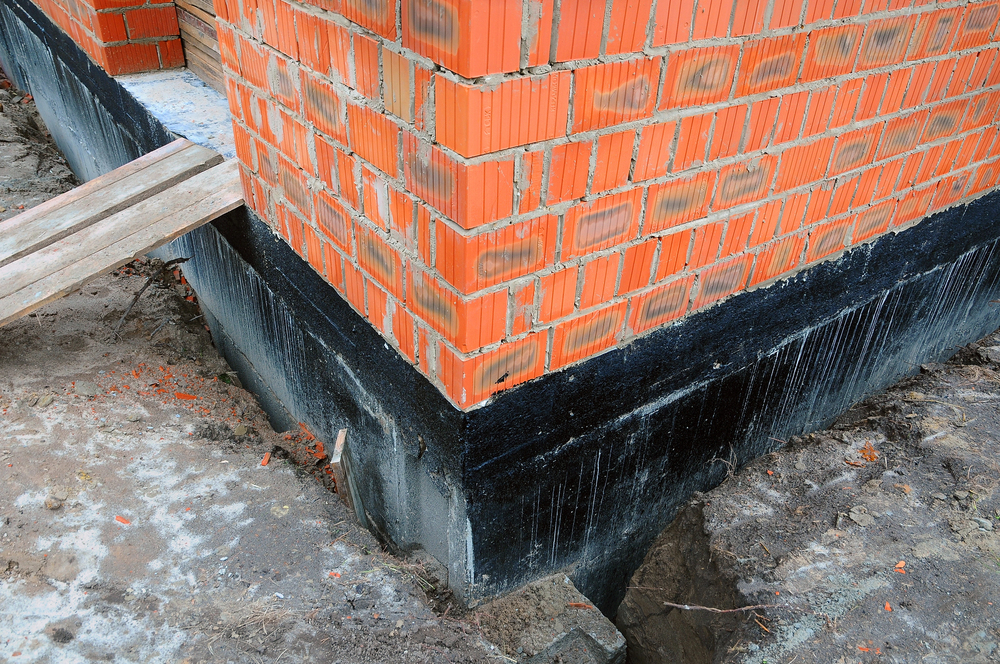
For exterior waterproofing, we excavate around the foundation, dig down to the footing level, and clear away the soil, which often includes the high clay content common around Kansas City and parts of the Ozark region. We then apply waterproof coatings to the outside walls using self-adhesive membranes or liquid rubber to form a continuous barrier. After that, we install exterior drains or a foundation drain system, often a French drain, to move groundwater away from the foundation and into safe discharge points. To finish the exterior process, we grade the yard away from the house and extend downspout leaders to reduce water pooling near foundations in St. Louis, Nixa, MO, and other Missouri areas.
Throughout these projects, we coordinate our exterior work with foundation piering, wall crack repair, bowed wall repair, or house leveling whenever needed. We also schedule radon measurement and mitigation when we open foundations for exterior work, and we offer crawl space repair or concrete lifting as related services.
Missouri’s climate presents unique challenges for homeowners. The state experiences heavy rainfall and occasional severe weather, especially in flood-prone areas like the Ozarks. Exterior waterproofing excels here by preventing water from entering at the source.
This method effectively stops moisture damage before it can affect your home’s foundation. It offers long-term protection against rising water tables and heavy downpours.
In contrast, interior waterproofing may only address minor seepage or condensation issues. While this method is less invasive, it cannot fully protect against external pressures that cause cracks and structural problems.
You should consider a combined approach when faced with high water tables that push water up through floors. Doing so provides a solid defense in Missouri’s dynamic climate conditions.
We want to clearly explain the benefits and drawbacks of interior waterproofing so you can make the best choice for your home.
On the positive side, we can complete most installations in just one to two days. We use non-invasive methods that protect your landscaping while still providing an excellent defense against moisture. By installing interior French drains and submersible pumps, alongside advanced systems that limit moisture buildup, we provide a quick and effective way to manage visible water issues. This significantly reduces the immediate risk of damage to your finished basement areas.
However, there are some downsides to consider. Interior waterproofing treats water after it enters the foundation, making it a reactive solution rather than a preventative fix. This method requires regular checks and ongoing maintenance to keep the pumps and drains clear so the system functions properly. You should also note that sump pumps can sometimes be noisy and create wet work areas in the basement. Most importantly, this approach does not stop water from seeping through your exterior walls and soil, which means you might need exterior work later to fully stop long-term seepage.
We highly recommend exterior systems for homes dealing with major water exposure.
The biggest advantage of exterior waterproofing is that we stop water before it ever reaches your basement. We use a waterproof membrane paired with a perimeter trench drain tied to a sump pump when needed, offering comprehensive protection. For added defense, we pair exterior membranes with concrete sealers and utilize heavy-duty waterproof coatings and excavation equipment for lasting results. This complete solution keeps your foundation dry, achieves a more effective result than interior drains in most cases, and greatly reduces long-term repair needs for your foundation walls and floors.
The drawbacks of this method primarily revolve around the scale of the work. We must excavate around your home, which increases the scope and requirements of the project. The process disrupts landscaping and hardscapes, meaning you must plan for site restoration after the trenching finishes. Because we need more labor, the installation takes longer than interior methods, and we face higher upfront commitments due to the extensive digging and materials. We may also affect nearby structures during trenching, which requires careful planning, and we sometimes need to secure permits for deep excavation and drainage work.
Using both interior and exterior waterproofing systems can be essential for Missouri homes facing complex water intrusion challenges. A high water table may force water to seep through floors, making a combined approach necessary.
This dual strategy prevents moisture from entering while also managing any internal dampness effectively. For properties with difficulties accommodating full exterior waterproofing due to space limitations or neighboring structures, a hybrid method works exceptionally well.
When we notice signs of water coming in from both the walls and the floors, it is wise to employ both techniques simultaneously. Tailoring the solutions to fit your home’s specific accessibility and structural issues ensures optimal protection.
In cases where excavation around all walls poses practical challenges, combining approaches becomes crucial for safeguarding your property against potential damage while directly addressing your existing concerns.
Choosing the right waterproofing method for your Missouri home requires careful thought. We must first assess the severity of your water issues. Homes in flood-prone areas often need exterior waterproofing for solid protection against heavy rain and poor drainage.
Interior waterproofing may suffice if you face minor seepage or condensation problems. It serves as a highly efficient and practical choice for managing less severe water issues.
We should also analyze the underlying cause of the water intrusion. Understanding whether your issues stem from grading, drainage, or foundation integrity is essential before making a final decision.
Simple fixes like improving your landscaping may resolve minor issues compared to extensive structural solutions. Requesting detailed estimates from our team can clarify what each service involves and help you make informed choices about the basement waterproofing systems that best fit your needs.
Moisture problems can sneak up on you, so it is crucial to spot them early.
Existing leaks along a wall in a finished basement clearly indicate that you need waterproofing measures. If left unchecked, these leaks can lead to significant water damage throughout your home. Similarly, a rotting wooden subfloor suggests ongoing moisture intrusion that can quickly undermine the integrity of your living space.
Mold growth is a serious warning sign of water issues in your environment. It worsens your indoor air quality and poses genuine health risks for you and your loved ones. High humidity levels or condensation issues also point to insufficient waterproofing in your basement area, which can create an incredibly uncomfortable living environment.
You should pay close attention to the structural elements of your home as well. Cracks in masonry block foundations can signal water-related structural problems, especially if your home is around 50 years old, and these should be addressed promptly. Likewise, peeling paint or efflorescence on your basement walls signals potential water seepage that requires attention from an experienced contractor like Firm Foundation Repair.
Finally, if you notice the activation of your sump pump during heavy rainfall, it indicates that you have active water management issues in your home’s foundation system, and it is essential to ensure it works efficiently. Any damage to personal property or finished basement areas due to moisture highlights the need for effective, immediate waterproofing solutions. Being proactive about these signs helps you maintain a safe and dry living space year-round while protecting your investment against potential pitfalls.
Choosing between interior and exterior waterproofing for your Missouri home requires careful thought. Each method has its unique strengths and weaknesses. Interior solutions are less disruptive to your daily life and property, while exterior options offer better long-term protection against water intrusion at the source.
A combined approach often yields the best possible results, tackling moisture from both the inside and the outside effectively. By letting Firm Foundation Repair assess your specific needs and conditions, we can help you protect your home more efficiently from lasting water damage.
Joplin, MO Location:
Business Name: Firm Foundation Repair
Address: 625 S Eagle Crest Lane, Joplin, MO 64801
Phone: (417) 317-6499
Business Hours:
Mon - Sun: 05:00 AM to 08:00 PM
24/7 Emergency Services Available
Springdale, AR Location:
Business Name: Firm Foundation Repair
Address: 1556 E Emma Ave, Springdale, AR 72764
Phone: (479) 212-1161
Business Hours:
Mon - Fri: 06:00 AM to 05:00 PM
Sat-Sun: Closed
Members of the NFRA (National Foundation Repair Association)
Sponsor Teach A Man To Fish Foundation
Partner with Youth Groups to send kids on mission trips
Donate to St. Jude and Living Water Foundation around the world
"Zero down, Zero interest payment program" through Sunlight Financial
25 Year Warranty
